Archival records
Digitisation, handwriting recognition and AI
The third strand is handwritten registers and case files. First the photography: spread after spread, in even light and without flash, because flash washes out faded ink. Then the images are worked on: AI models help to make out the handwriting, to bring a dozen spellings of one surname together, and to suggest which volume holds the year missing from the sequence. The last word stays with the researcher — AI is confidently wrong exactly where the clerk abbreviated a word or changed hands mid-book, so every reading is checked against the original.
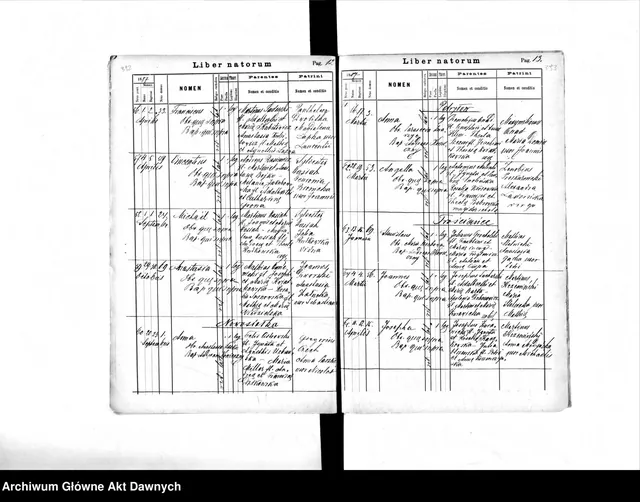
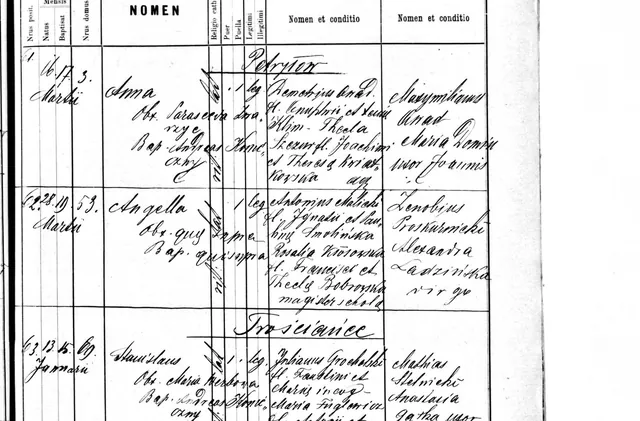
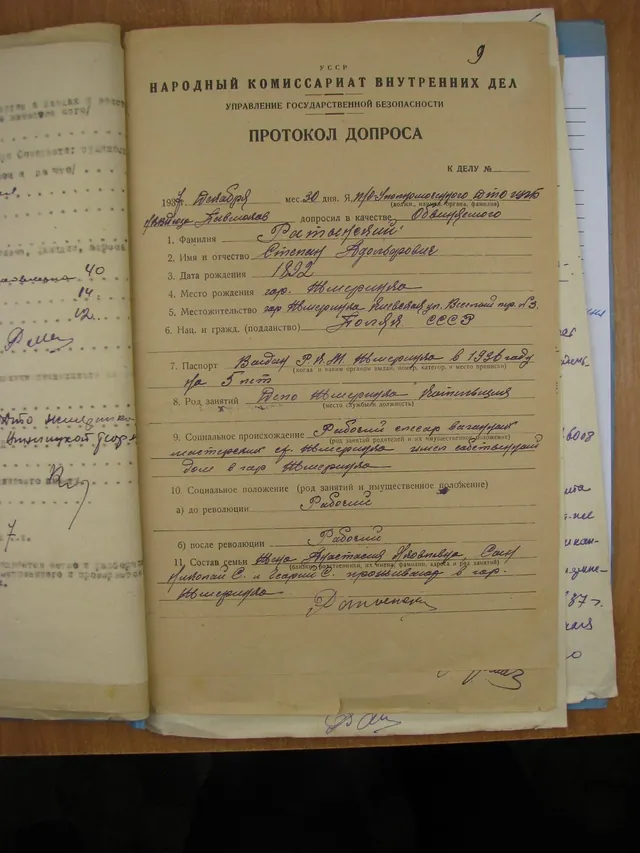
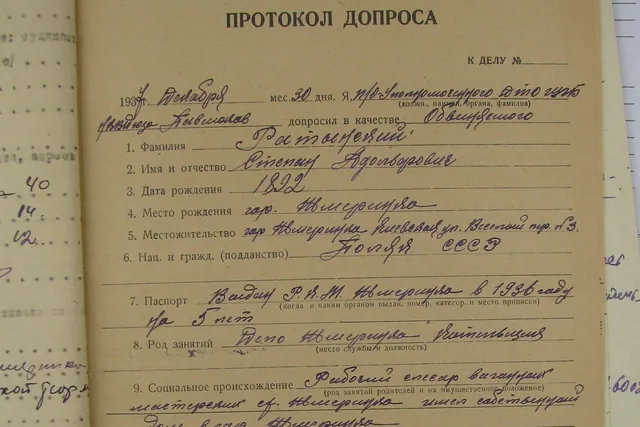
The images come from scans held by the Central Archives of Historical Records in Warsaw (AGAD), from a register the organisation worked through for its own research, and from the family archive of the head of the organisation: a 1937 case file opened against his great-grandfather, later rehabilitated. Material photographed for someone else's commission is never published here.
Capability
What we can do with manuscripts
Not a statement of intent. Below is what the organisation works with and can carry out for a partner institution, museum or community.
Digitising handwritten registers
Photographing spreads in the reading room: even light, no flash, guided by the volume's own internal index. What comes out is a complete set of images, fit both for reading and for keeping.
Handwriting recognition and AI
The images are put through AI models: they propose a reading for each line, bring together different spellings of the same surname, and flag gaps in the numbering. The researcher decides — here AI is a tool, not a source.